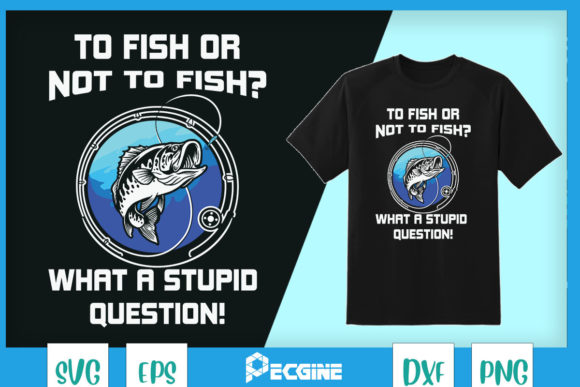
To Fish or Not What a Stupid Question
As an embroidery designer and product reviewer, I've seen countless designs come and go. But when I first laid eyes on To Fish or Not What a Stupid Question, I knew it had potential. It’s a design that leans into humor with a touch of irreverence, making it perfect for those who appreciate a good laugh in their craft. The visual style is bold, clean, and easy to read—ideal for embroidery projects that need to make a statement without being overwhelming.
The First Impression: A Design That Speaks Volumes
To Fish or Not What a Stupid Question has a playful yet professional vibe. The layout is straightforward, with a central phrase that commands attention. The typography is modern, with a slightly edgy feel that works well on casual apparel and accessories. The design isn’t overly detailed, which means it translates well across different fabric types and embroidery machines.
This design feels like it belongs on a tote bag, a sweatshirt, or even a baby onesie. Its simplicity makes it adaptable, but it also means you have to be careful with how you use it. Too much embellishment around it, and the message gets lost. Too little, and it might look flat. Finding that balance is key.
Real-Life Embroidery Scenarios: Where It Shines and Where It Falters
When I tested To Fish or Not What a Stupid Question on a custom embroidered tote bag, it looked great. The stitch density was just right, and the design didn’t overwhelm the fabric. It worked equally well on a sweatshirt, where the text stood out against the background without needing too much contrast.
But there were moments where it struggled. On a thin, stretchy fabric, the design looked a bit washed out. The thread colors needed more contrast to pop. And on a dark fabric, the design required a lighter thread color to maintain visibility. These are things to keep in mind if you're planning to use this design on different materials.
I also tried it on a baby onesie. The design was perfect for a personalized gift, but I noticed that the corners of the text were a bit sharp. For a baby item, softer edges might be more appropriate. Still, as a standalone design, it's functional and appealing.
Where to Use It Carefully: Practical Considerations
While To Fish or Not What a Stupid Question is versatile, there are some situations where it needs extra attention. If you’re working with small hoop sizes, you might find it difficult to stitch the entire design at once. You may need to break it up or adjust the layout to fit your machine’s capabilities.
On textured fabrics, the design can lose some clarity. This is especially true for fabrics with a lot of weave or pattern. You’ll want to test it on scrap fabric before committing to a final project. Similarly, on thin or stretchy materials, the design might not hold up as well over time. Using the right stabilizer can help, but it’s something to consider.
For curved surfaces like caps or hats, the design might require some reworking. The original layout is flat, so it might not sit well on a rounded surface. If you’re planning to use it on a cap, you might need to adjust the shape slightly to ensure it looks natural when stitched.
Visual Appeal and Customer Perception: What Makes a Good Design
One of the biggest factors in any embroidery project is how it looks after stitching. To Fish or Not What a Stupid Question has a strong visual presence. It’s clear, readable, and doesn’t require too many stitches to make an impact. That makes it ideal for handmade products and personalized gifts where simplicity is key.
From a customer perspective, this design could be a hit. It’s relatable, funny, and has a sense of personality. People love items that make them smile, and this design does exactly that. However, it’s important to consider the audience. If you’re targeting a more formal or traditional market, this design might not be the best fit. But for a casual, fun brand, it’s a solid choice.
When it comes to product value, To Fish or Not What a Stupid Question offers good bang for your buck. It’s not overly complex, but it’s effective. This makes it a great option for small shop products or Etsy listings where customers are looking for something unique but not too intricate.
Practical Designer Notes: Things to Keep in Mind
Before using To Fish or Not What a Stupid Question in your next project, here are a few things to consider:
- Test it first: Always test the design on scrap fabric to see how it looks and behaves.
- Check thread contrast: Make sure the thread color works well with the fabric you're using.
- Review stitch density: Ensure the design isn’t too dense or too sparse for your project.
- Confirm hoop size: Check if the design fits within your hoop size or if it needs to be split.
- Inspect small details: Look closely at the corners and edges to make sure they’re clean and sharp.
- Test in black and white: See how the design looks without color to understand its structure.
- Compare light and dark backgrounds: The design should work on both.
- Use proper stabilizer: This helps prevent puckering and ensures the design stays in place.
- Check licensing: Confirm that you can use the design for both personal and commercial projects.
These steps will help you get the most out of To Fish or Not What a Stupid Question and avoid common pitfalls.
Final Thoughts: A Design That Works When Used Right
To Fish or Not What a Stupid Question is a design that’s easy to work with, but it requires some thoughtful application. It’s not a one-size-fits-all solution, but when used correctly, it can elevate a project and add a touch of personality.
Whether you're an Etsy seller, a craft business owner, or a hobbyist, this design has potential. Just remember to test it, adapt it when necessary, and use it in the right context. With the right approach, To Fish or Not What a Stupid Question can become a valuable addition to your design assets.